chrisLittle.design

Carrier Portal for Cargill’s Salt Enterprise

I lead the UX Design and Strategy from the first pitch to the MVP and beyond.
An illustrative sketch of a flower

Role

  • Lead UX Designer
  • UI Designer
  • UX Researcher

TL;DR

  • Real-time visibility into drop and hook process at Cargill's Salt Plants.
  • Multiple plants, people, and processes.
  • Convoluted data architecture and process.

KPIs and Wins

  • Truck driver time on site.
  • Carrier trailers time in the yard.
  • Time saved for Customer Care Team and Shipping Coordinators.

“A bird's-eye view eliminate the need to walk to the yard every morning.”

Plant Ops

Problem

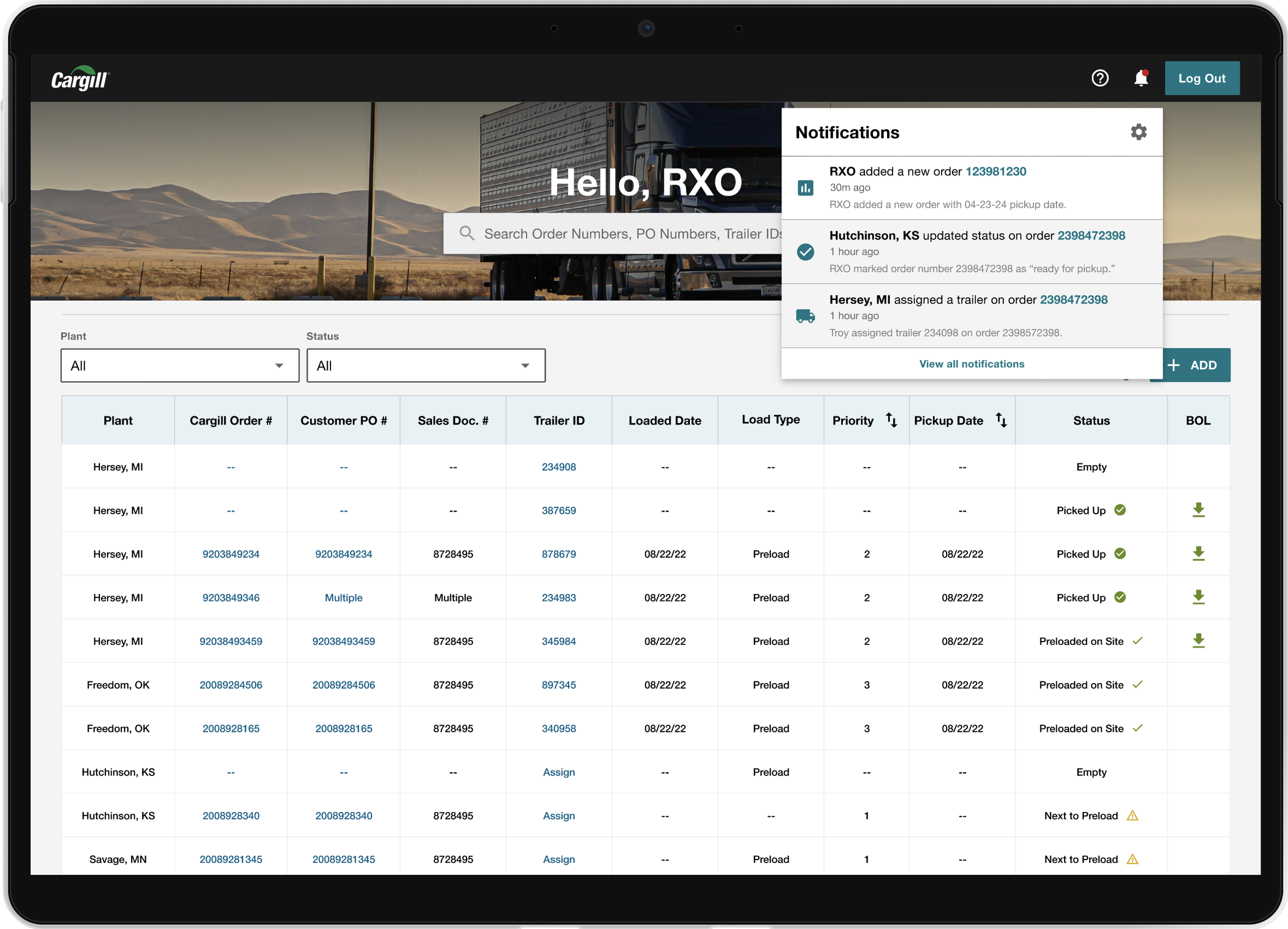
Plant employees at Cargill manually update a whiteboard, then translate this to a shared spreadsheet to record truck loading and departure times. This information was then relayed to the Customer Care team, who maintained a separate spreadsheet and subsequently shared it with the Carrier, an external vendor.

Solutuon

By leveraging Cargill's Smart Check-In suite of products, develop an authenticated platform that provides real-time visibility into truck status at any plant for all user personas.
An illustrative sketch of a flower

Challenges

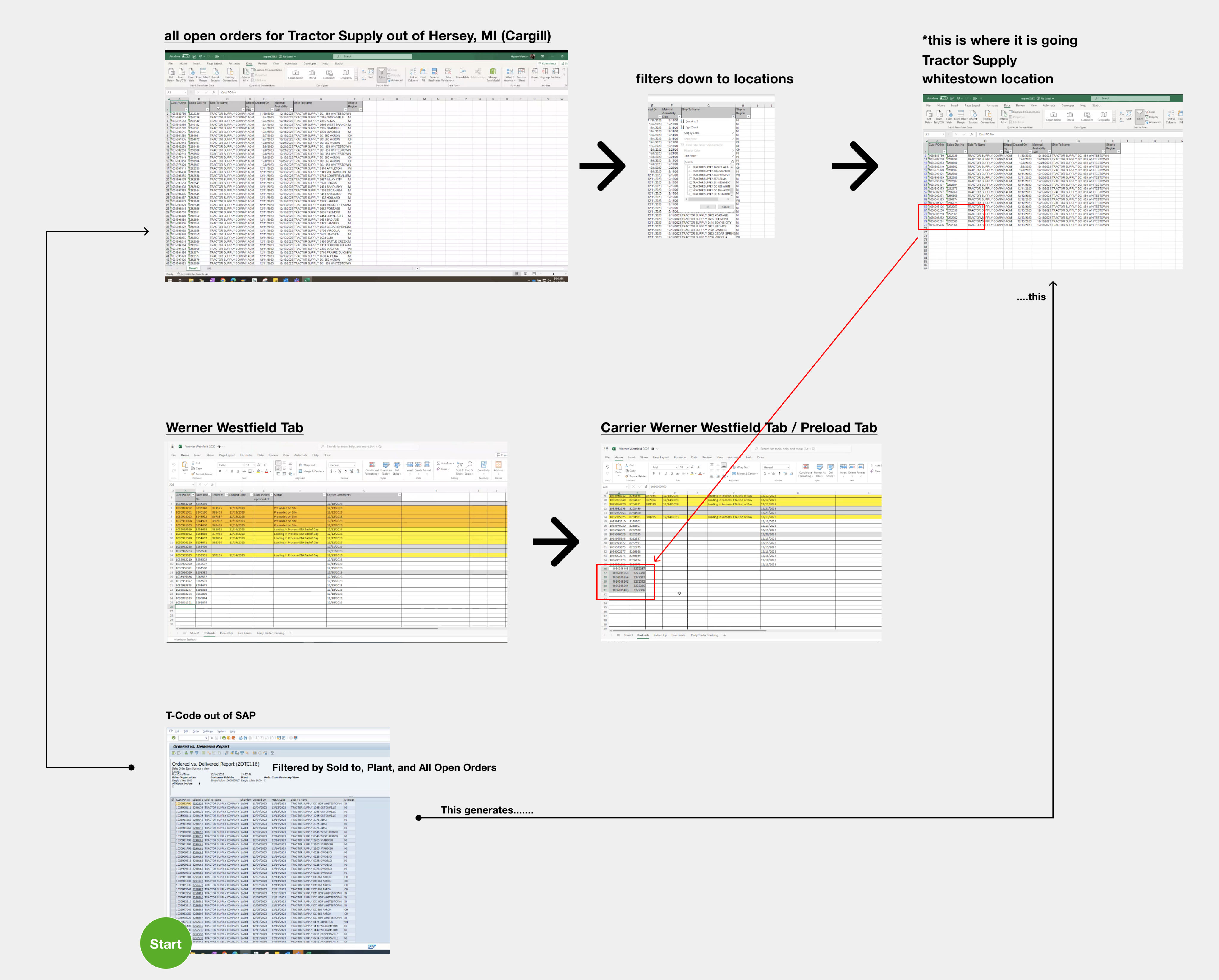
In order to understand all user flows, I had to meet with many representatives  to map out their current work flows.

The portal serves 3 to 4 distinct user personas, making it essential to engage with stakeholders and users early in the process. Through these conversations, I identified various gaps and nuances in the workflow across different plants. As expected, each plant manages the process in its own unique way.

The learning curve for institutional knowledge was steep, particularly regarding the "drop and hook" process. To design an effective user experience for the portal, I needed a comprehensive understanding of how this process operates.

After meeting with subject matter experts I was able to generate the process flow diagram of the drop and hook process.

Solutuon

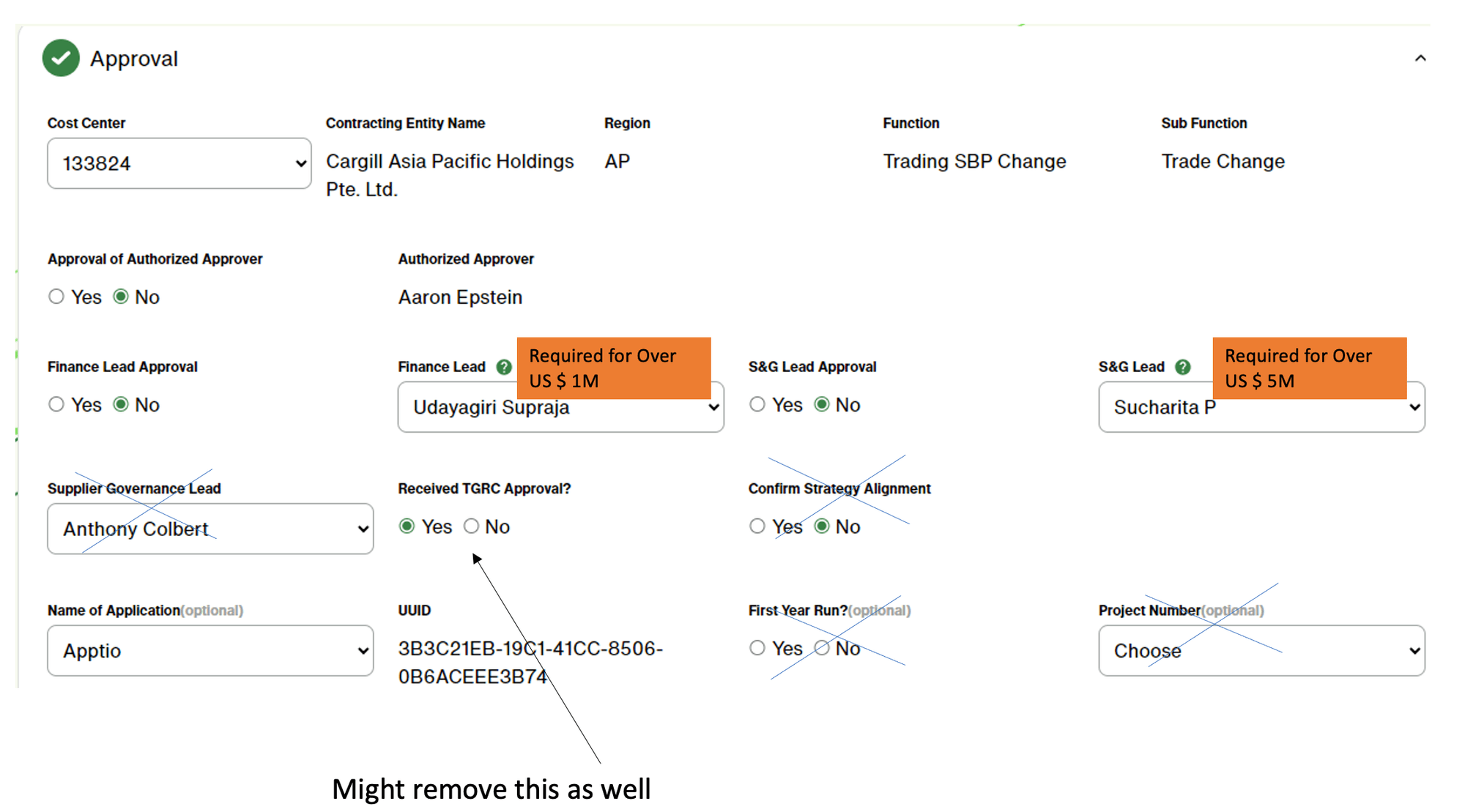
A systems thinking approach was essential in designing the portal. Rapidly developing a prototype proved to be the right decision; however, I recognize the importance of engaging users earlier in the process. In agile development, user testing can sometimes be deprioritized, but in the future, I would advocate more strongly to ensure that user testing remains an integral part of the process.
An illustrative sketch of a flower

Solutuon

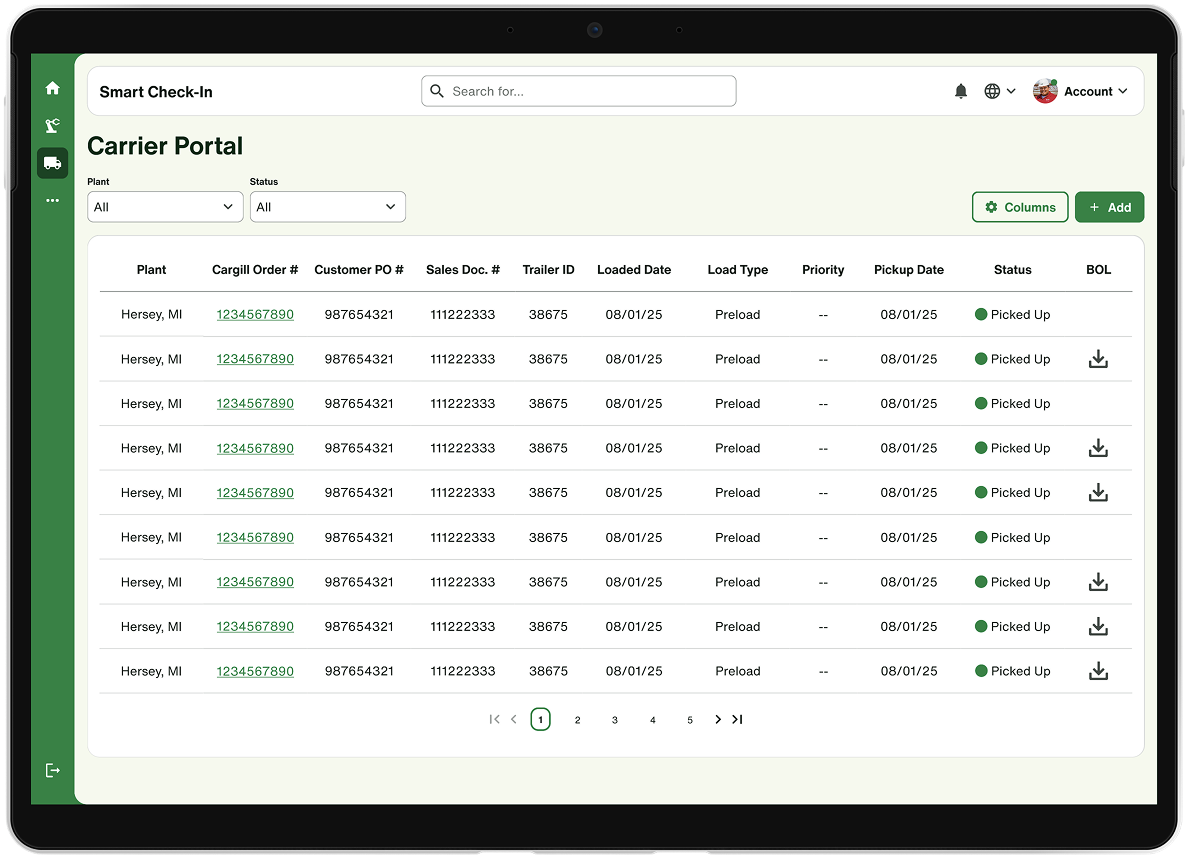
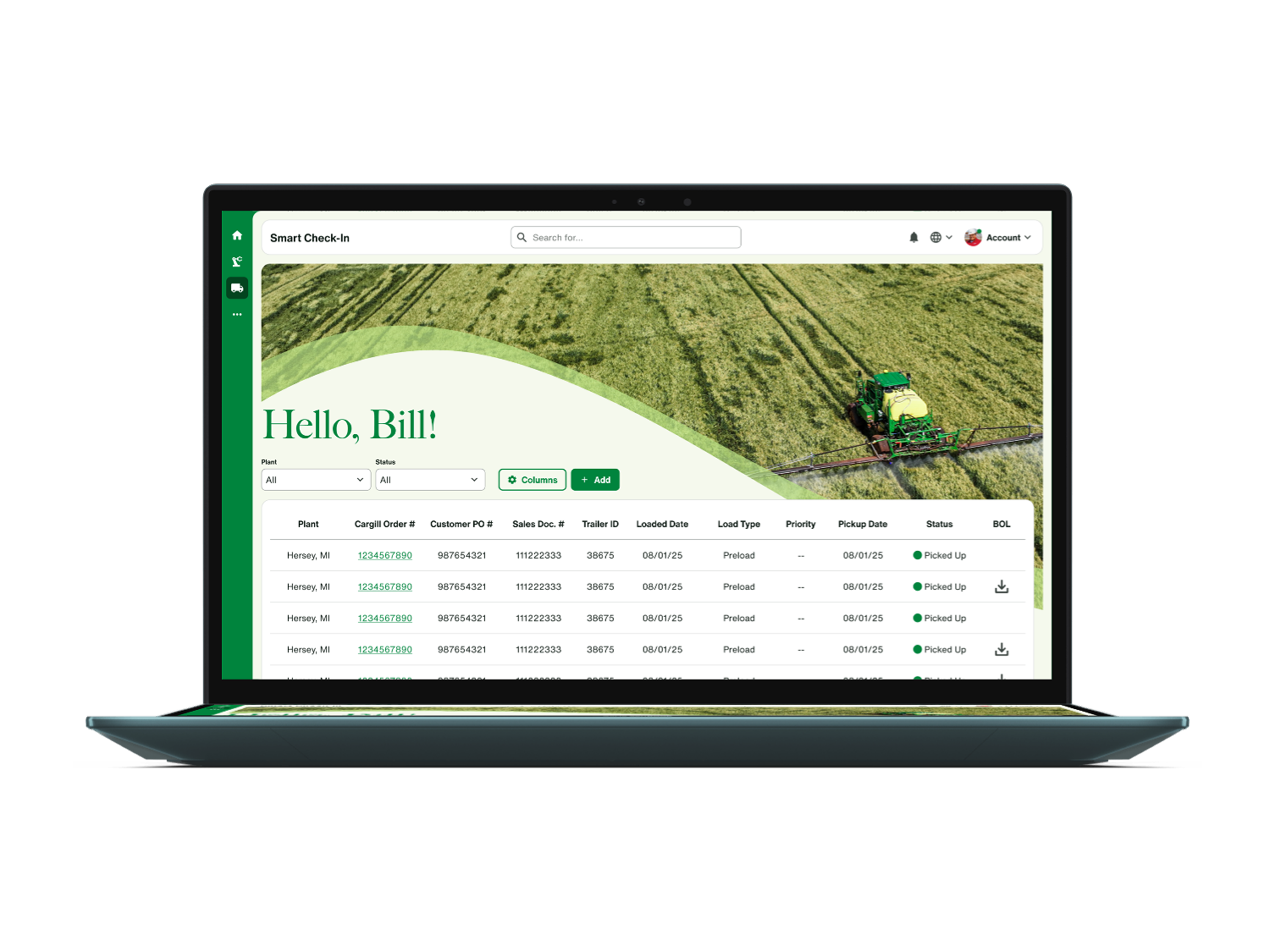
The original design was developed using Material UI (MUI). Following a rebrand and the introduction of an enterprise Design System (which I helped develop), I re-skinned the Carrier Portal to ensure compliance with the new brand guidelines.
An illustrative sketch of a flower

Next Case Study →

Home

chrislittle.design

chrisLittle.design

Carrier Portal for Cargill’s Salt Enterprise

I lead the UX Design and Strategy from the first pitch to the MVP and beyond.

An illustrative sketch of a flower

Role

  • Lead UX Designer
  • UI Designer
  • UX Researcher

TL;DR

  • Real-time visibility into drop and hook process at Cargill's Salt Plants.
  • Multiple plants, people, and processes.
  • Convoluted data architecture and process.

KPIs and Wins

  • Truck driver time on site.
  • Carrier trailers time in the yard.
  • Time saved for Customer Care Team and Shipping Coordinators.

“A bird's-eye view eliminates the need to walk to the yard every morning.”

Plant Ops

Problem

Plant employees at Cargill manually update a whiteboard, then translate this to a shared spreadsheet to record truck loading and departure times. This information was then relayed to the Customer Care team, who maintained a separate spreadsheet and subsequently shared it with the Carrier, an external vendor.

Solutuon

By leveraging Cargill's Smart Check-In suite of products, develop an authenticated platform that provides real-time visibility into truck status at any plant for all user personas.

An illustrative sketch of a flower

Challenges

In order to understand all user flows, I had to meet with many representatives  to map out their current work flows.

The portal serves 3 to 4 distinct user personas, making it essential to engage with stakeholders and users early in the process. Through these conversations, I identified various gaps and nuances in the workflow across different plants. As expected, each plant manages the process in its own unique way.

The learning curve for institutional knowledge was steep, particularly regarding the "drop and hook" process. To design an effective user experience for the portal, I needed a comprehensive understanding of how this process operates.

After meeting with subject matter experts I was able to generate the process flow diagram of the drop and hook process.

Solutuon

A systems thinking approach was essential in designing the portal. Rapidly developing a prototype proved to be the right decision; however, I recognize the importance of engaging users earlier in the process. In agile development, user testing can sometimes be deprioritized, but in the future, I would advocate more strongly to ensure that user testing remains an integral part of the process.

An illustrative sketch of a flower

Solutuon

The original design was developed using Material UI (MUI). Following a rebrand and the introduction of an enterprise Design System (which I helped develop), I re-skinned the Carrier Portal to ensure compliance with the new brand guidelines.

An illustrative sketch of a flower

Home

Next Case Study →

chrislittle.design

chrisLittle.design

Carrier Portal for Cargill’s Salt Enterprise

#Supply Chain

#B2B 

#Dashboard

#Systems Thinking

#Research

An illustrative sketch of a flower

Role

  • Lead UX Designer
  • UI Designer
  • UX Researcher

TL;DR

  • Real-time visibility into drop and hook process at Cargill's Salt Plants.
  • Multiple plants, people, and processes.
  • Convoluted data architecture and process.

KPIs and Wins

  • Truck driver time on site.
  • Carrier trailers time in the yard.
  • Time saved for Customer Care Team and Shipping Coordinators.

“A bird's-eye view eliminate the need to walk to the yard every morning.”

Plant Ops

Problem

Plant employees at Cargill manually update a whiteboard, then translate this to a shared spreadsheet to record truck loading and departure times. This information was then relayed to the Customer Care team, who maintained a separate spreadsheet and subsequently shared it with the Carrier, an external vendor.

Solution

By leveraging Cargill's Smart Check-In suite of products, develop an authenticated platform that provides real-time visibility into truck status at any plant for all user personas.

An illustrative sketch of a flower

Challenges

In order to understand all user flows, I had to meet with many representatives  to map out their current work flows.

The portal serves 3 to 4 distinct user personas, making it essential to engage with stakeholders and users early in the process. Through these conversations, I identified various gaps and nuances in the workflow across different plants. As expected, each plant manages the process in its own unique way.

The learning curve for institutional knowledge was steep, particularly regarding the "drop and hook" process. To design an effective user experience for the portal, I needed a comprehensive understanding of how this process operates.

After meeting with subject matter experts I was able to generate the process flow diagram of the drop and hook process.

Learnings

A systems thinking approach was essential in designing the portal. Rapidly developing a prototype proved to be the right decision; however, I recognize the importance of engaging users earlier in the process. In agile development, user testing can sometimes be deprioritized, but in the future, I would advocate more strongly to ensure that user testing remains an integral part of the process.

An illustrative sketch of a flower

Updates

The original design was developed using Material UI (MUI). Following a rebrand and the introduction of an enterprise Design System (which I helped develop), I re-skinned the Carrier Portal to ensure compliance with the new brand guidelines.

An illustrative sketch of a flower

Home

Next Case Study →