Driver Wait & Processing Times Experience
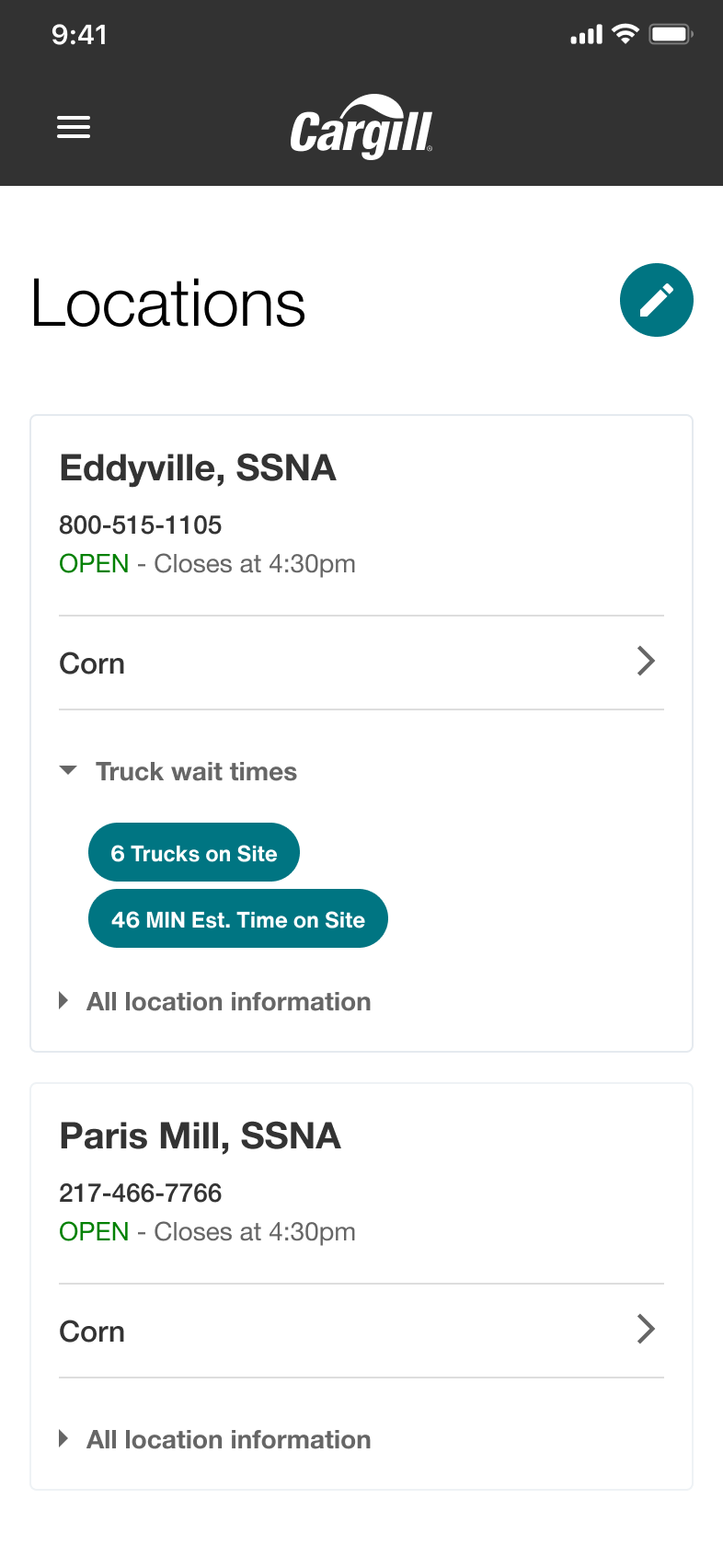
By providing grain haulers and growers with real-time visibility into plant wait and processing times, we helped users make more informed delivery decisions while improving operational efficiency at Cargill crush facilities.
The Problem
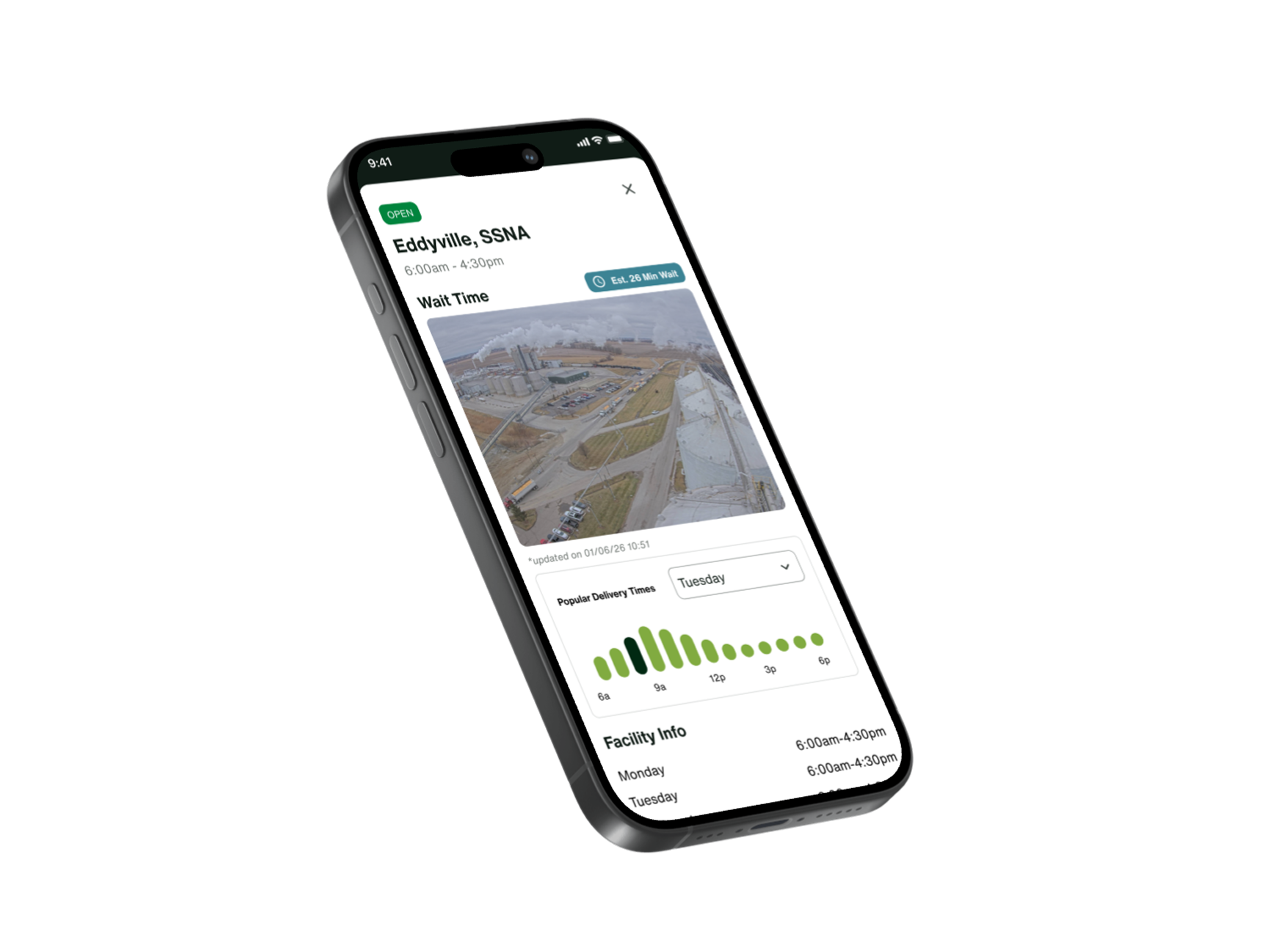
During peak delivery periods, trucks arriving at the crush plant often created significant congestion. Long queues extended beyond facility boundaries and, in some cases, backed up onto nearby highways, creating both operational inefficiencies and safety concerns.
The business saw an opportunity to improve transparency around plant processing times. By giving drivers visibility into current wait times before arriving on-site, Cargill could help customers better plan deliveries while encouraging a more efficient flow of grain into the facility.
Users + Context
The primary users of this experience were grain growers, producers, and truck drivers delivering grain to Cargill crush plants.
A secondary audience included plant operators, business stakeholders, and leadership teams who could use wait time data to better understand operational performance, identify bottlenecks, and monitor key performance indicators across facilities.
“Access to truck wait time data has given us the confidence to make smarter operational decisions that reduce delays and improve performance.”

Grain Hauler
User Goals
- Help growers and drivers make informed delivery decisions before leaving the farm.
- Provide greater transparency into plant operations.
- Reduce uncertainty and frustration associated with long wait times.
Solutuon
- Improve the efficiency of inbound grain deliveries.
- Increase throughput by enabling drivers to better plan their schedules.
- Create a differentiated customer experience not commonly offered by competing facilities.
- Establish operational metrics that could be used to measure and improve plant performance over time.
My Role
As the Lead UX Designer and Researcher, I was responsible for:
- User research and stakeholder interviews
- Survey design and analysis
- User journey mapping and process documentation
- Wireframing and interaction design
- High-fidelity UI design
- Prototyping and validation
- Design system integration
- Cross-functional workshops and stakeholder collaboration
Solutuon
The concept had already gained traction among business stakeholders, but we needed to validate whether wait time visibility would provide meaningful value to growers and drivers.
To gather feedback, we partnered with regional grower representatives and surveyed 167 growers. Rather than distributing a traditional survey, representatives incorporated the questions into existing one-on-one conversations with growers. This approach significantly improved participation rates and provided richer qualitative feedback than a standalone survey would have produced.
Solutuon
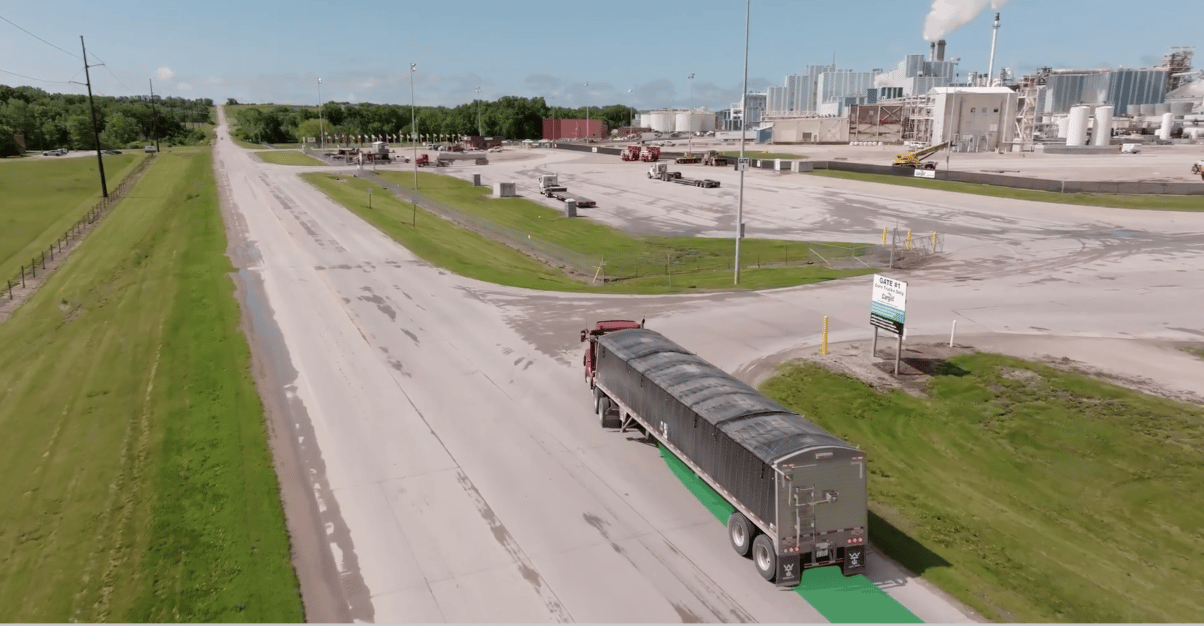
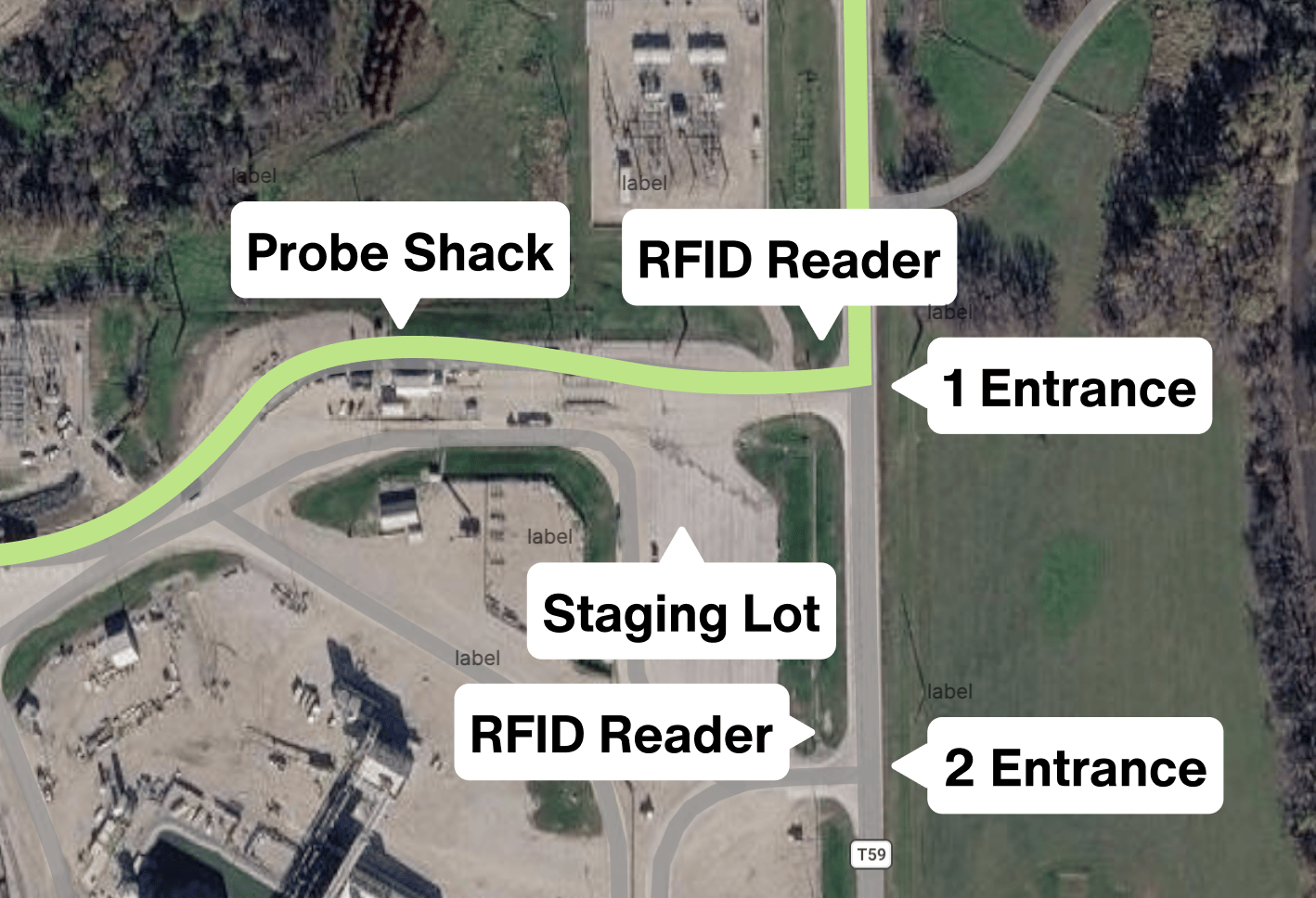
A critical part of the project involved understanding how trucks moved through the facility and how wait times could be accurately measured using RFID technology.
Working closely with plant operators and subject matter experts, I documented the operational workflow, identified key tracking points, and mapped how data would flow through the experience. This work ensured the proposed solution aligned with real-world plant operations and technical constraints.
Solutuon
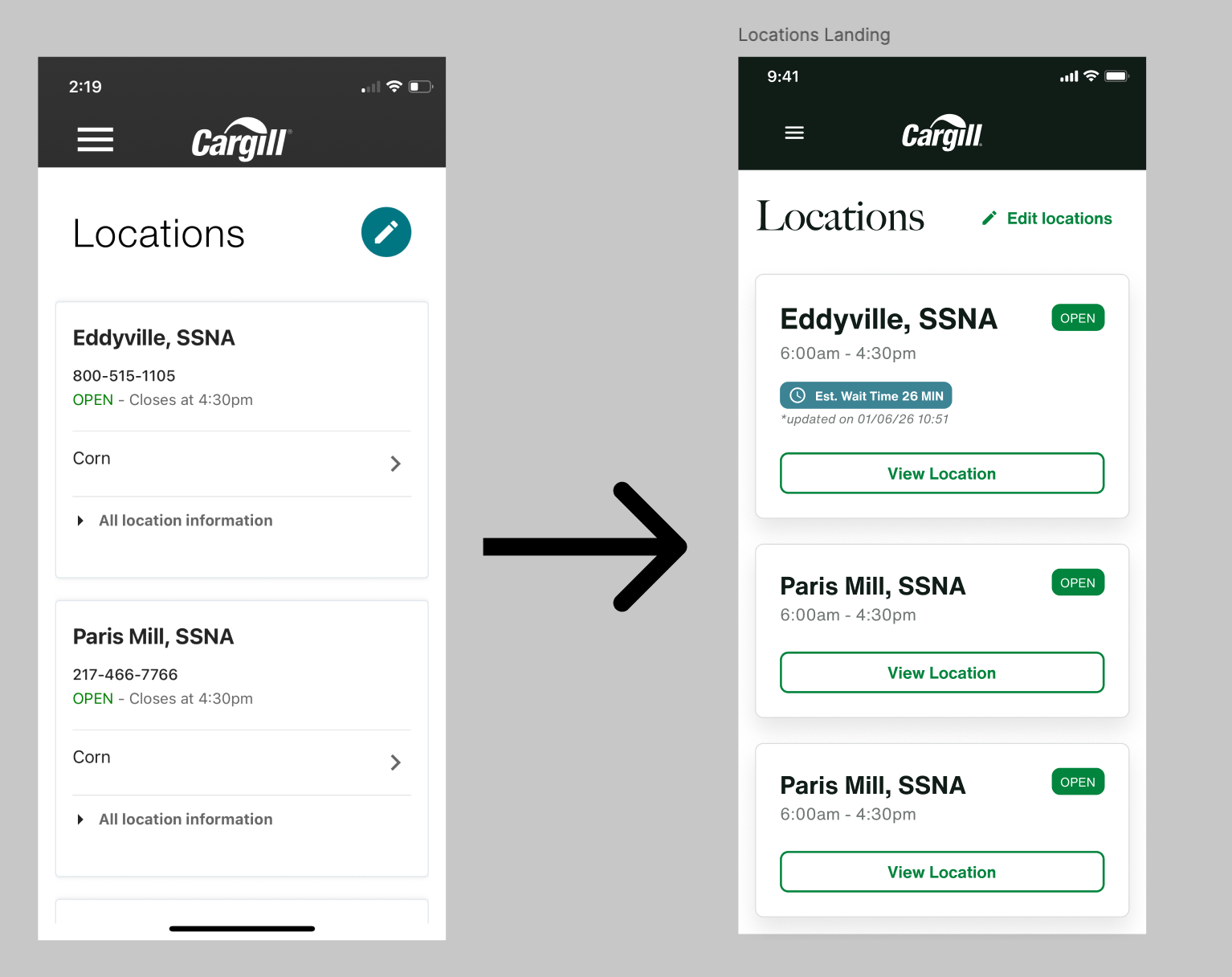
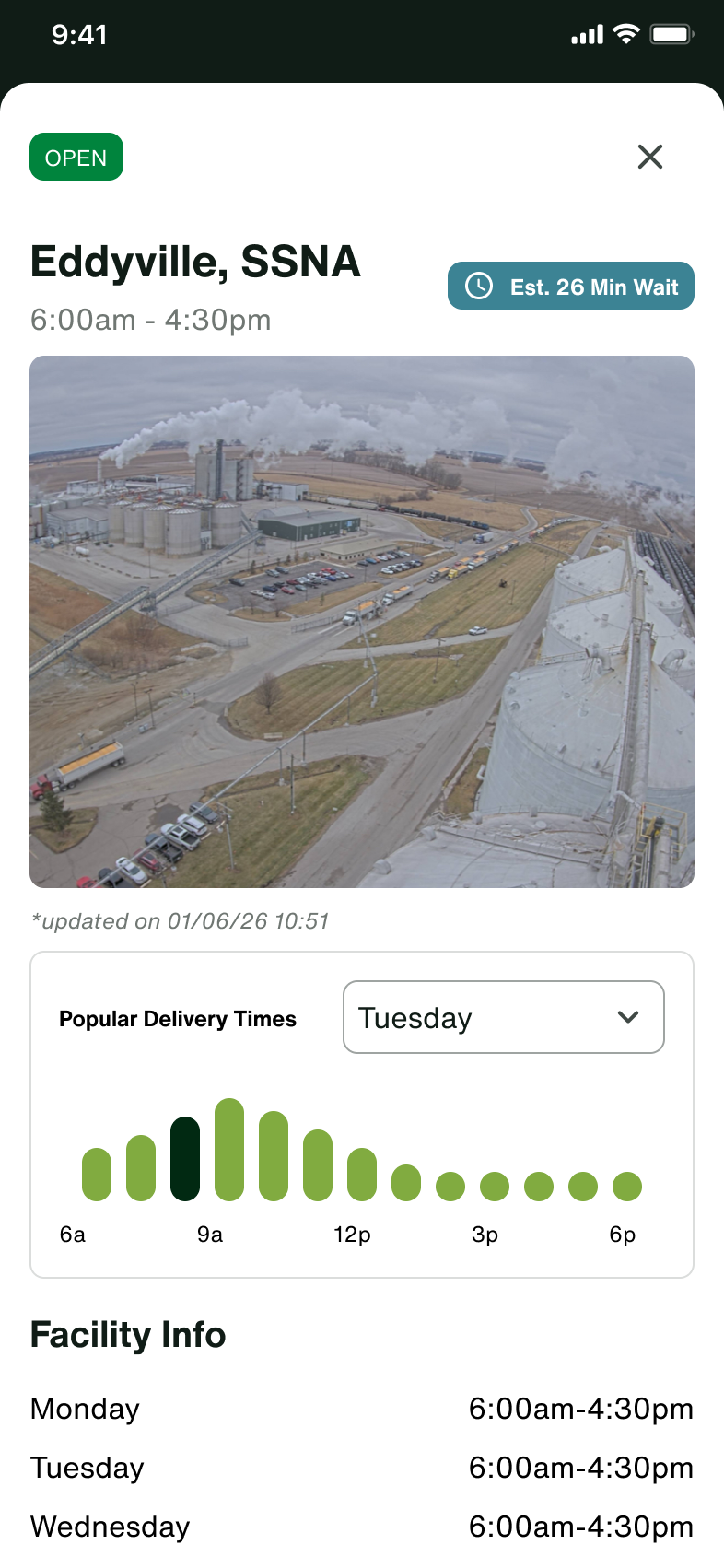
Using research findings and operational requirements, I created user flows, wireframes, prototypes, and final interface designs.
The experience focused on providing drivers with clear visibility into current wait times while also creating dashboards that enabled plant leadership to monitor operational bottlenecks and performance trends.
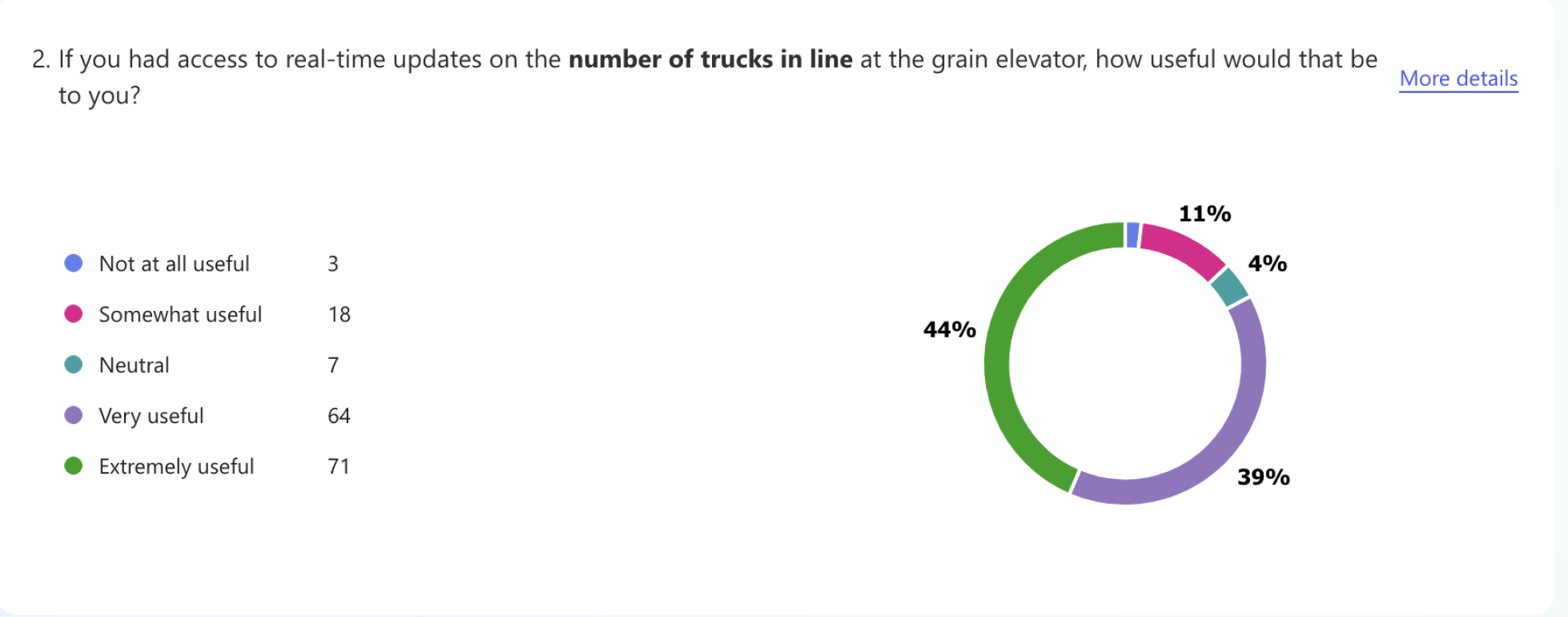
Validating Oppurtunoty Before Building
Rather than relying solely on stakeholder assumptions, we conducted targeted research to validate whether wait time transparency would influence delivery decisions. Survey results provided the confidence needed to move forward with an MVP.
Solutuon
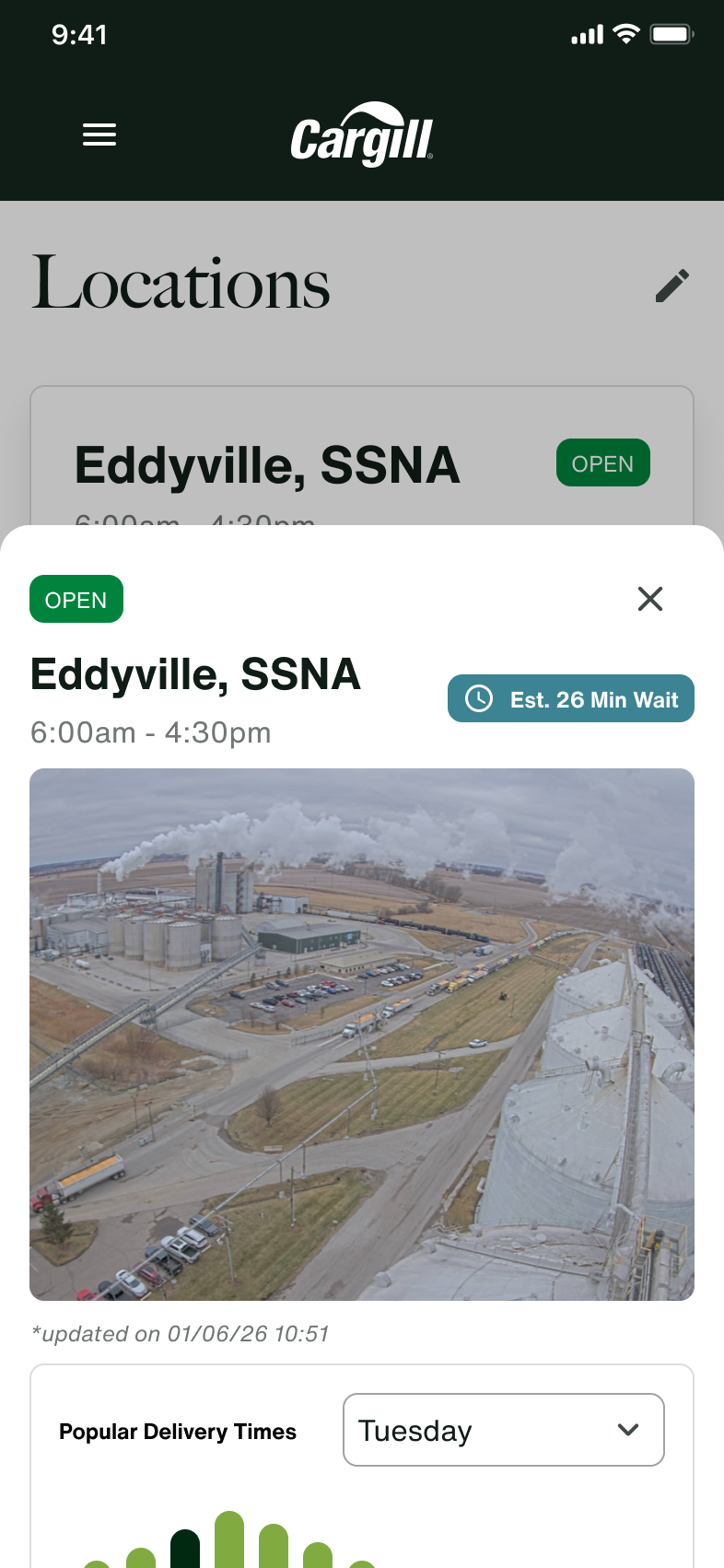
The primary experience was designed around a simple question:
"How long will I wait if I deliver right now?"
By surfacing this information directly to users, drivers could make better decisions about when and where to deliver grain.
Solutuon
In addition to the driver experience, the solution created new opportunities for operational reporting. Leadership teams gained visibility into wait times, throughput, and potential bottlenecks, creating a foundation for future performance measurement and optimization.
Solutuon
Using research findings and operational requirements, I created user flows, wireframes, prototypes, and final interface designs.
The experience focused on providing drivers with clear visibility into current wait times while also creating dashboards that enabled plant leadership to monitor operational bottlenecks and performance trends.
Outcomes
The initial release was launched as a minimum viable product (MVP) at a single facility to validate the concept before broader investment.
Success metrics included:
- Driver engagement with the wait time feature
- Reduction in uncertainty around delivery planning
- Improved operational visibility for plant leadership
- Wait time and throughput performance metrics
- Stakeholder adoption and feedback
The MVP provided a foundation for ongoing measurement through product analytics and user engagement data. If successful, the experience would be expanded to additional facilities across the network.
Solutuon
One of the most valuable lessons from this project was the importance of deeply understanding operational workflows before designing a solution.
The user experience could not be separated from the realities of plant operations. To create an accurate and useful experience, I worked closely with plant operators to understand truck movement, processing workflows, and the placement of RFID hardware throughout the facility.
Technical feasibility was another important consideration. Although the hardware infrastructure had already been purchased, many implementation details were still evolving. Early collaboration with engineering teams and operational stakeholders helped uncover constraints, reduce uncertainty, and accelerate the design process.
The project also highlighted the value of releasing a focused MVP. While a more comprehensive solution was envisioned, budget and implementation constraints made an incremental rollout the most practical approach. Launching a targeted version allowed the team to validate assumptions, gather usage data, and establish a clear path for future expansion.
Looking ahead, the next phase of the project includes aligning the experience with the latest brand standards and design system while continuing to expand functionality based on user feedback and operational insights.
Solutuon
Lorem Ipsium